
Keynotes

Valentine Charles

Valentine Charles

Data Services Director
Europeana Foundation

Website ↗

Valentine Charles is the Data Services Director of the Europeana Foundation, which leads the common European data space for cultural heritage. Her work focuses on the publication and exchange of cultural heritage data to support reuse and audience engagement.
Valentine has worked with Europeana since 2009, building deep expertise in cultural heritage data standardisation, aggregation and quality. She supported the development and adoption of the Europeana Data Model (EDM), a framework that enables the representation of links between cultural heritage objects and the entities surrounding them - such as people, places, concepts, and timespans.
Following her work on the EDM, she coordinated the development of Metis, the data aggregation and publication infrastructure used at Europeana, before taking on her current role as Data Services Director.
Beyond her operational work, Valentine is an active speaker in the cultural heritage communities, presenting at international conferences and seminars on topics ranging from semantic cultural heritage data to the evolving European data space for cultural heritage.

Built for reuse: making cultural heritage data fit for purpose

Technologies from digitisation to 3D modelling and AI-driven enrichment have transformed what cultural heritage institutions can produce, yet impact depends on reuse, and reuse depends on whether data fits its user’s purpose. Technologists, heritage professionals, and data reusers each define quality differently, and each is right. The result is a gap between what is produced and what is used. Drawing on the experiences of Europeana, the common European data space for cultural heritage and ECHOES, this keynote examines how that gap can be managed, not ignored. Using Twin it! 3D as a running example, it explores the tension between standardisation and user needs, and how the campaign shifted the conversation from technical specifications to shared purposes. The talk applies this lens to AI, drawing on Europeana’s paper “The case for Public AI”, asking how technology, heritage practice and public good can be reconciled, and closes with calls to action for technologists and heritage professionals.
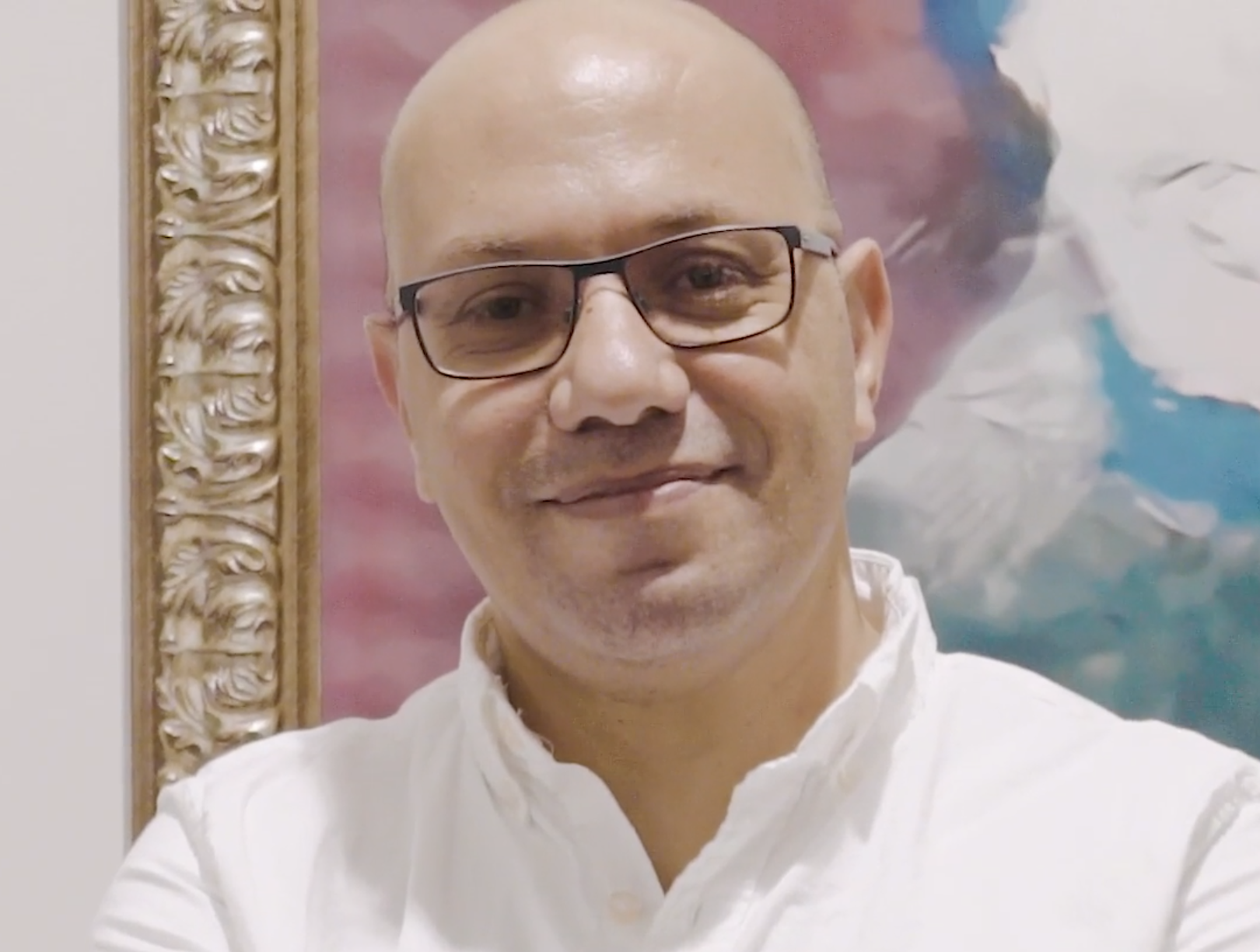
Ahmed Elgammal

Ahmed Elgammal

Professor at Computer Science Department
Rutgers University

Website ↗

Dr. Ahmed Elgammal is a professor at the Department of Computer Science at Rutgers University. He is the founder and director of the Art and Artificial Intelligence Laboratory at Rutgers, which focuses on data science in the domain of digital humanities. He is also an Executive Council Faculty at the Center for Cognitive Science at Rutgers University.
Prof. Elgammal published over 200 peer-reviewed papers, book chapters, and books in the fields of computer vision, machine learning, artificial intelligence, and computational creativity. His research on knowledge discovery in art history and the use of AI in art generation have received wide international media attention, including reports on the Washington Post, New York Times, the Guardian, and many others. In 2016, a TV segment about his research, produced for PBS, has won an Emmy award. Dr. Elgammal also led the AI team which completed Beethoven 10th symphony using emerging LLMs, which was a pioneering project in music generation, receiving worldwide media coverage, and several awards.
Dr Elgammal received the National Science Foundation CAREER Award in 2006. Dr. Elgammal received his M.Sc. and Ph.D. degrees in computer science from the University of Maryland, College Park, in 2000 and 2002, respectively.

From Computation to Historical Knowledge: Mapping the Emerging Field of Computational Art History

Computational approaches are transforming the study of art, from the analysis of brushstrokes, materials, and iconography to the exploration of patterns across collections containing thousands of works. Yet computational art history is not simply AI applied to artworks. The same computational operation, whether classification, retrieval, similarity measurement, or multimodal generation, can perform very different scholarly functions, and a successful computational result does not necessarily constitute historical evidence. In this keynote, I will map the emerging field of computational art history around the scholarly questions that computation serves rather than the algorithms it employs. I will examine how art-historical concepts become computational representations, how observations become evidence, and how evidence supports, or fails to support, historical claims. Examples spanning formal analysis, iconography, retrieval, attribution, technical examination, and recent foundation-model and retrieval-augmented approaches will illustrate recurring gaps between computational validation and historical inference. I will conclude by discussing opportunities for a new generation of computational methods that integrate visual, material, textual, and contextual evidence while making provenance, uncertainty, and the path from evidence to interpretation explicit.

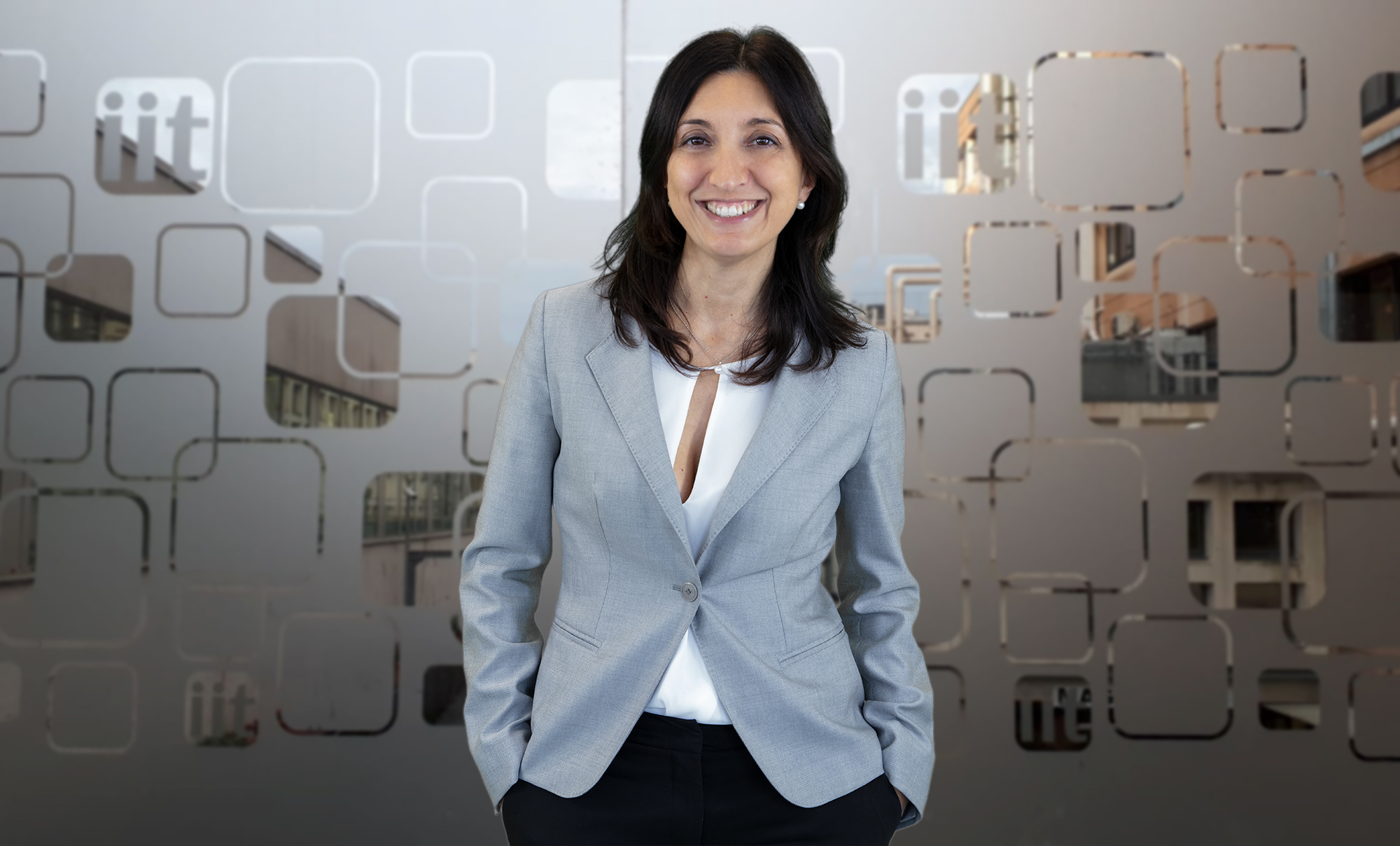
Arianna Traviglia

Arianna Traviglia

Director of the Centre for Cultural Heritage Technology
Italian Institute of Technology

Website ↗

Dr. Arianna Traviglia is Director of the Centre for Cultural Heritage Technology (CCHT) at the Italian Institute of Technology (IIT). Her research focuses on the application of advanced technologies to the study, protection, and conservation of cultural heritage. With a background in archaeology and imaging technologies, she leads interdisciplinary research combining Artificial Intelligence, Robotics, and Nanotechnologies for the investigation and preservation of material culture and ancient landscapes.
She has authored over 100 scientific publications and has coordinated and contributed to numerous EU-funded research and innovation projects on cultural heritage preservation and protection. Dr. Traviglia also serves as a panel member and expert evaluator for several European Commission funding programmes.
She has held academic appointments at the University of Venice, the University of Sydney, and Macquarie University, and has collaborated with the Council of Europe on policy guidelines for the ethical use of Artificial Intelligence in cultural heritage. She currently chairs the Technical and Scientific Committee of the CDP Foundation.

Shaping cultural heritage practice in the age of AI

Identifying traces of past human activity, examining the condition of an object, and connecting information scattered across sources are all part of cultural heritage work. Each involves decisions about what to investigate, where to direct attention, and how to interpret what is found. Computational methods, particularly AI-based approaches, increasingly contribute to these tasks, bringing new possibilities into contact with established practices and professional judgement. Taking everyday heritage workflows as its starting point, this keynote considers where and how artificial intelligence, computer vision, and related techniques can make a practical contribution. Applications across research, conservation, and protection provide the setting for discussing their integration: the needs that guide development, the ways specialists work with computational outputs, and the adjustments required when methods encounter diverse materials and working conditions. Particular attention is given to the interplay between automation and expert assessment, and to the collaborative work needed to make computational tools useful in sustained professional practice.