Venue & Travel
Jump to: Barcelona • Campus Nord • Conference Rooms • Social Event • Conference Dinner • Getting There • Accommodation • Discovering Barcelona
Host City: Barcelona
Barcelona, the capital of Catalonia, is one of Europe’s most vibrant cultural and scientific hubs. With a rich history spanning over two millennia, the city offers an exceptional concentration of cultural heritage sites, museums, archives, and architectural landmarks.
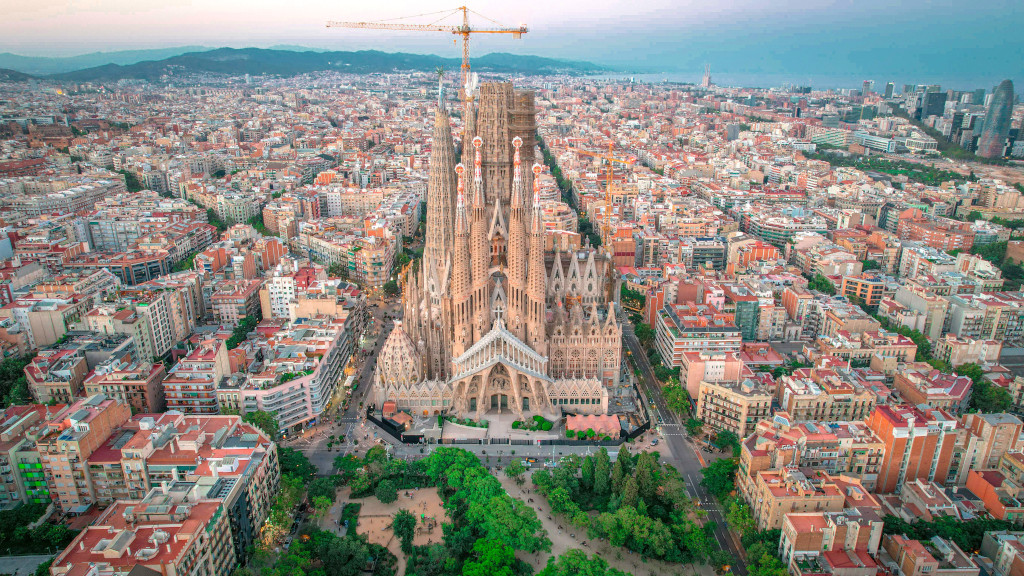
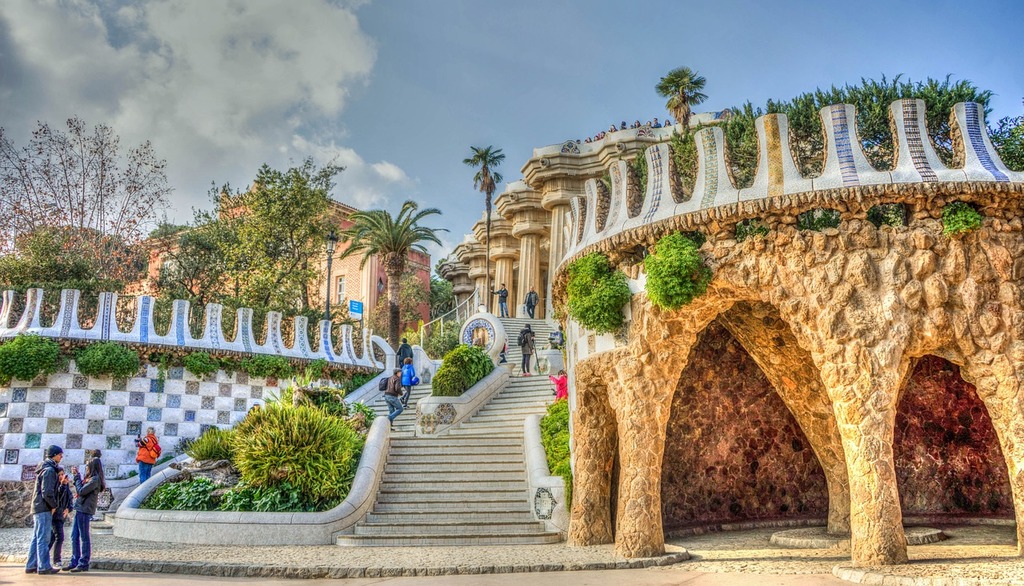
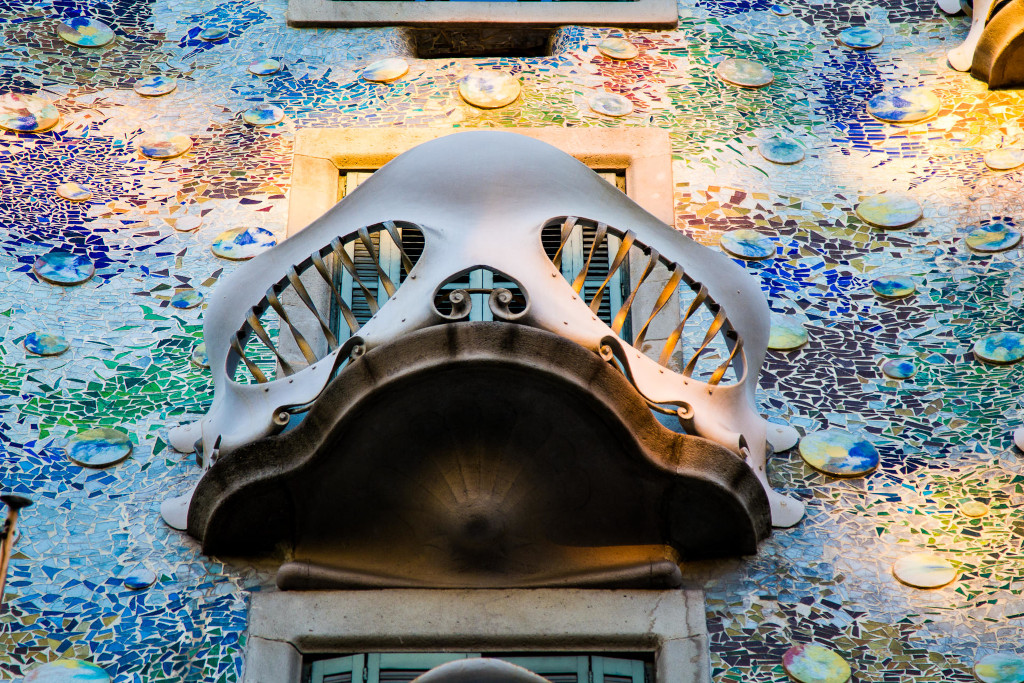
In 2026, Barcelona will commemorate the centenary of the death of Antoni Gaudí, one of the most influential architects of modernism, whose works (such as the Sagrada Família, Park Güell, and Casa Batlló) are recognized as UNESCO World Heritage Sites.
Beyond Gaudí, Barcelona hosts major cultural institutions, historical neighborhoods, and a rich architectural variety. With its strong tradition in cultural heritage, architecture, and digital innovation, Barcelona provides an ideal setting for GCH 2026.
Conference Venue: UPC – Campus Nord
GCH 2026 will take place at the Campus Nord of the Universitat Politècnica de Catalunya (UPC), one of Spain’s leading technical universities.
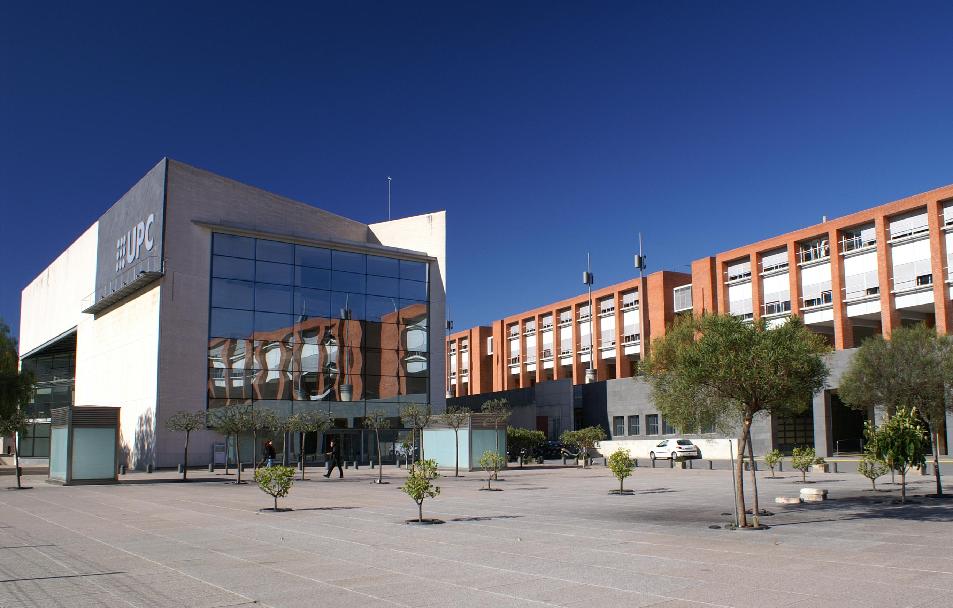
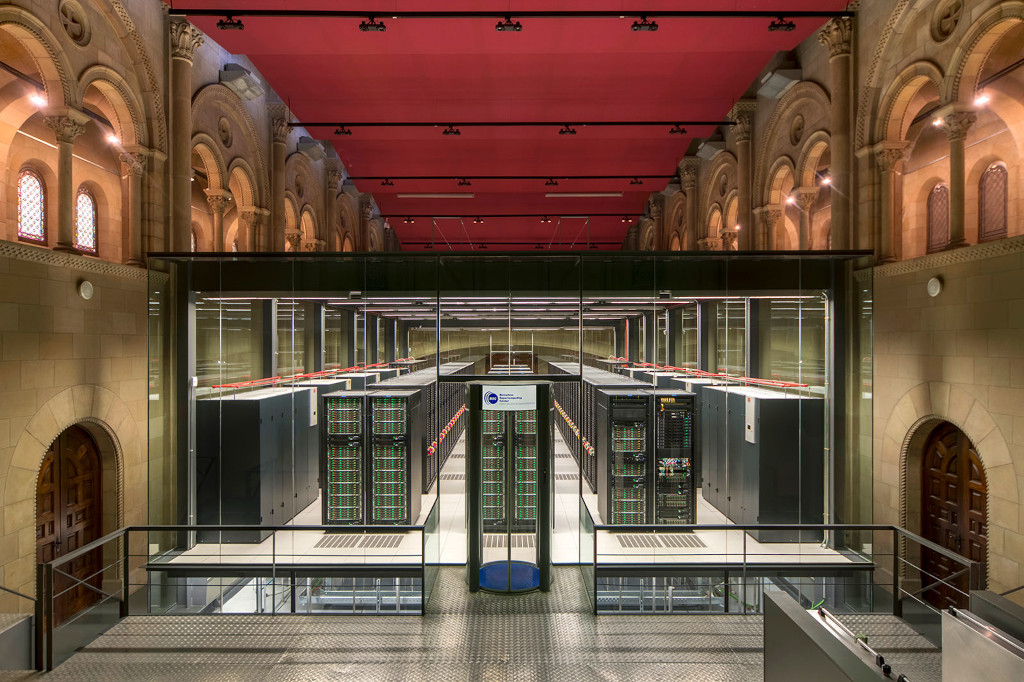
Campus Nord is located in the western part of the city and offers modern academic facilities, lecture halls, and collaborative spaces.
The campus is very well connected to Barcelona and the surrounding metropolitan area by public transport:
-
Metro: Palau Reial (L3) and Zona Universitària (L3, L9, L10)
-
Tram: Lines T1, T2, and T3
-
Bus: Several urban and intercity lines
Conference Rooms
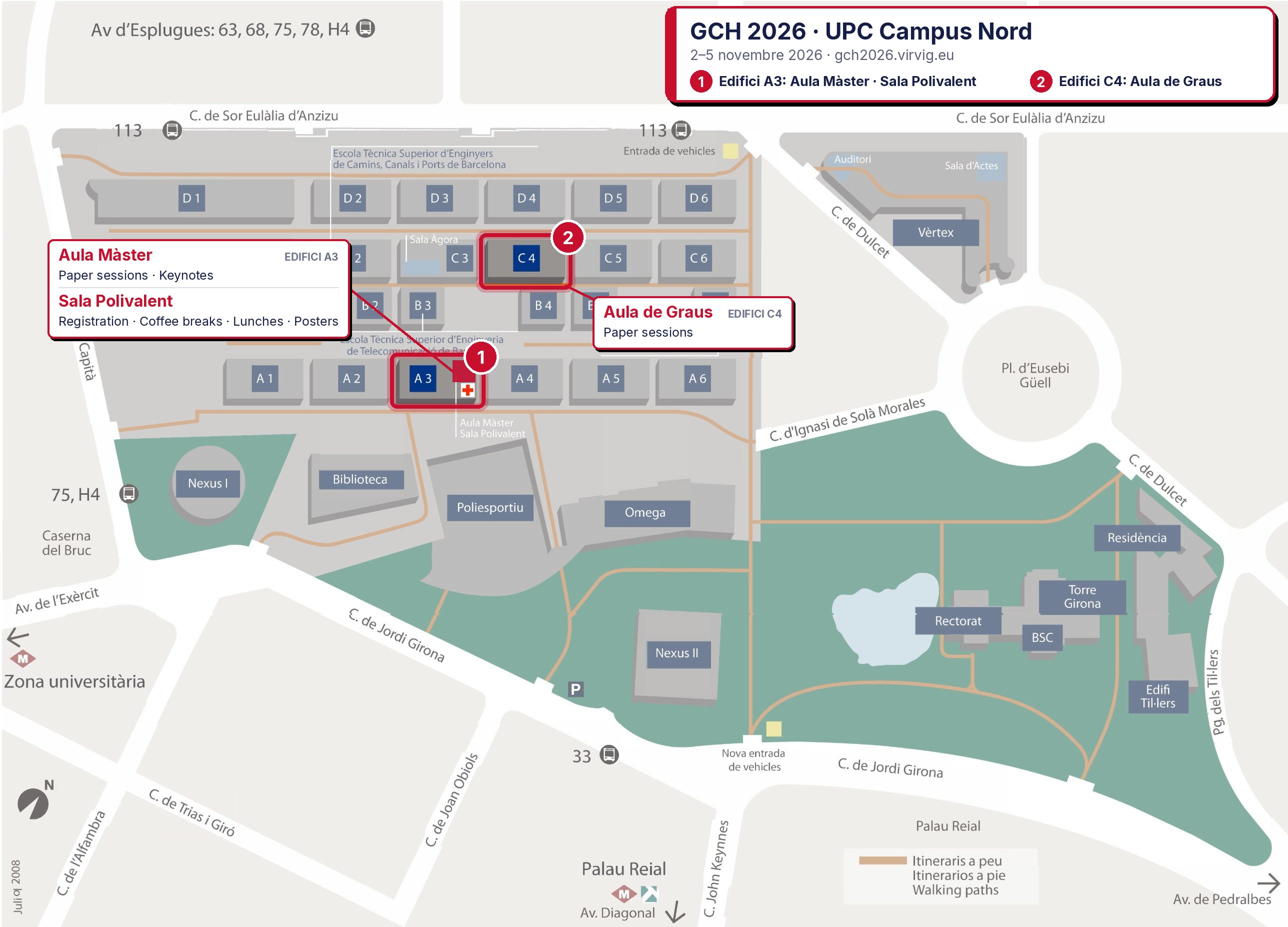
The conference will take place in two buildings of Campus Nord, a short walk from each other:
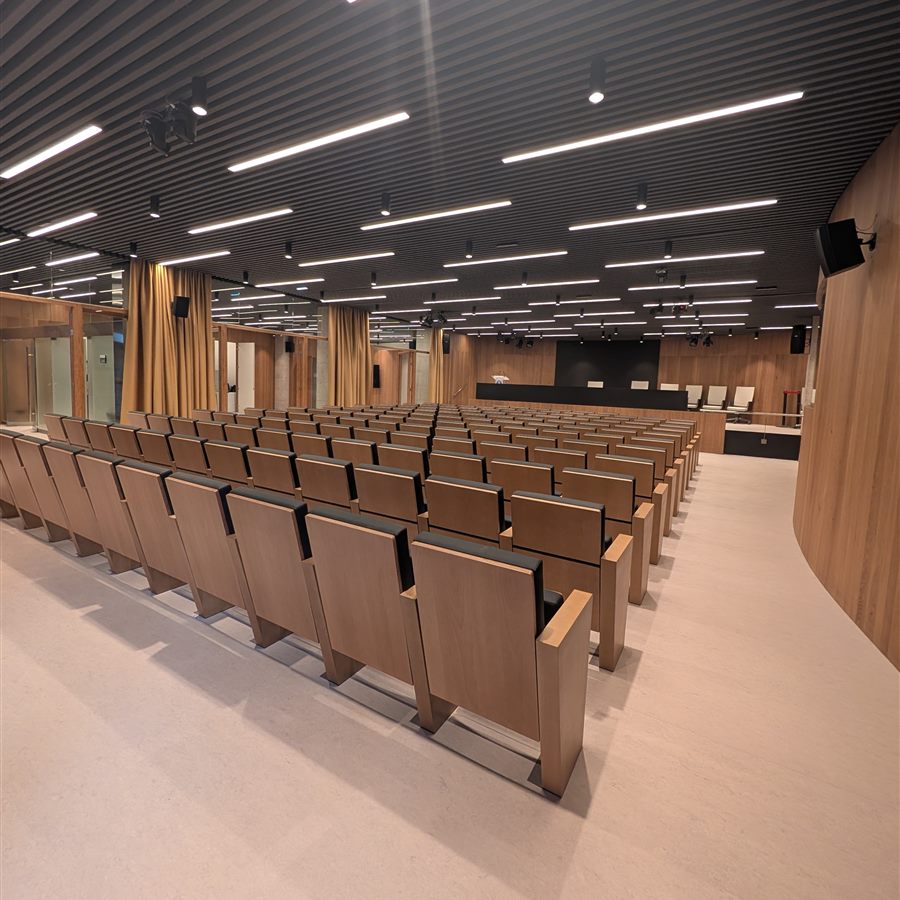
- Aula Màster (Building A3): paper sessions and keynotes.
- Sala Polivalent (Building A3): registration, coffee breaks, lunches and poster sessions.
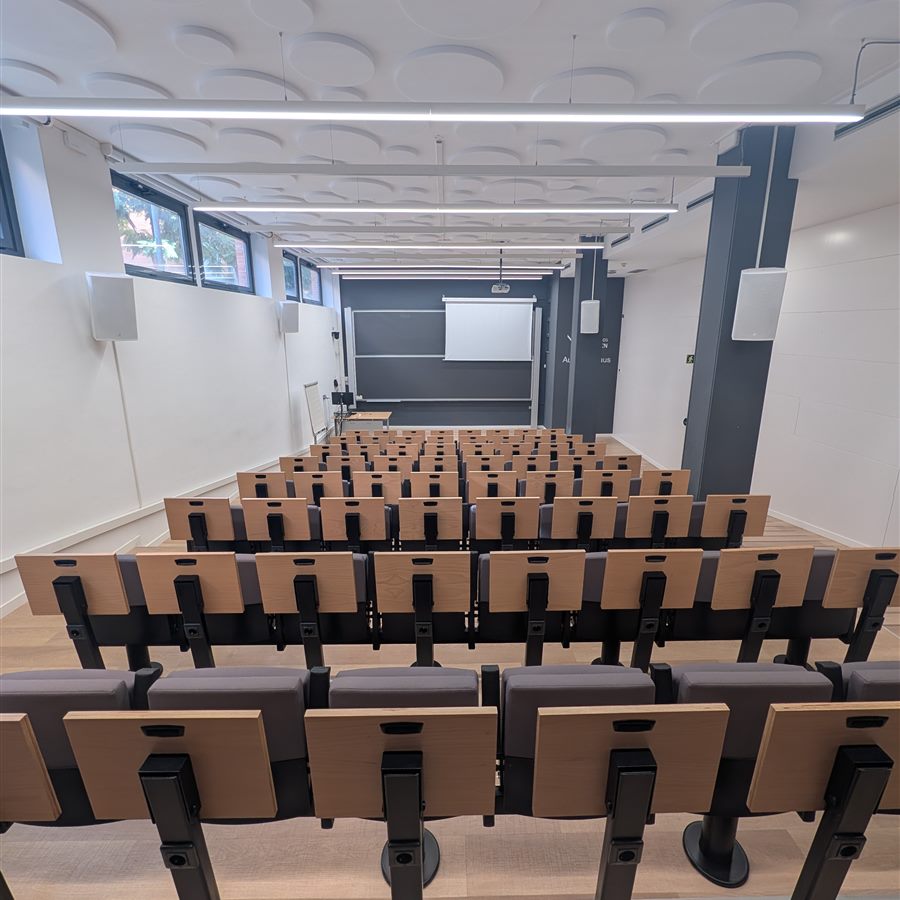
- Aula de Graus (Building C4): paper sessions.
Social Event: Gaudí in Context
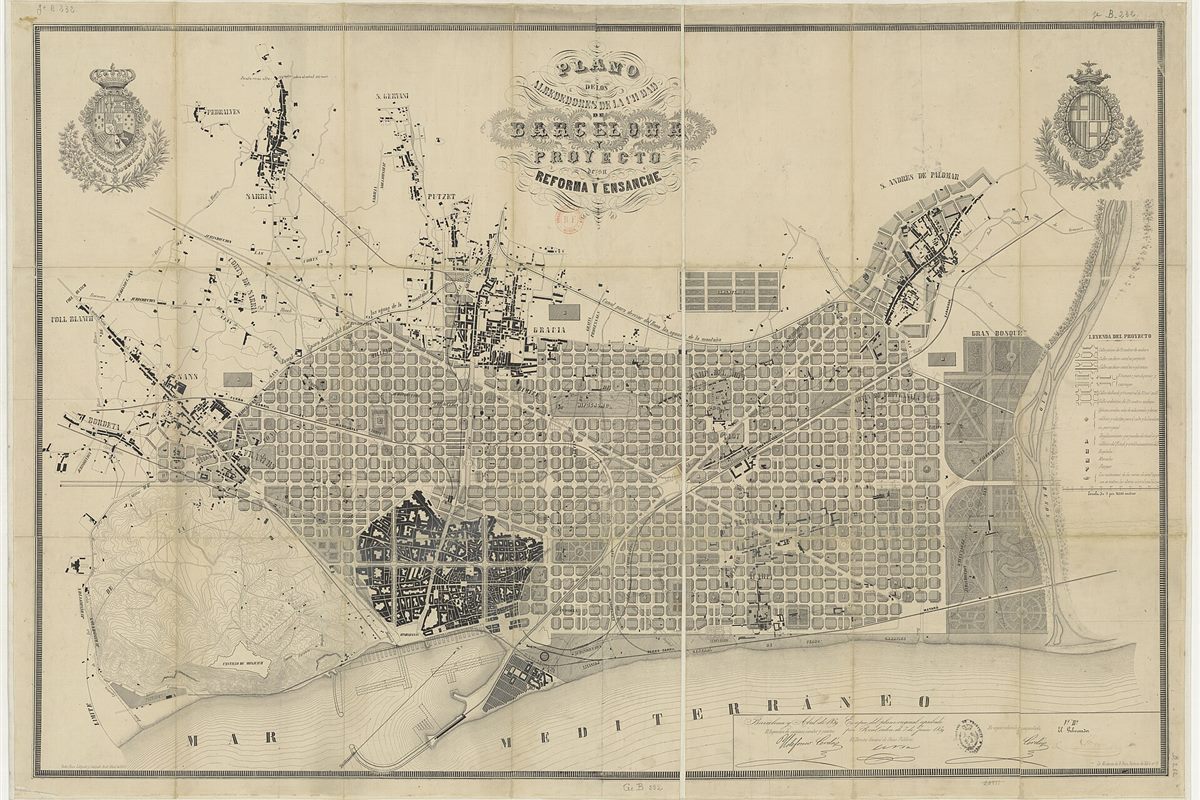
The GCH 2026 social event is a guided walking tour through the Eixample and its Modernisme architecture. One of the most admired architects of the twentieth century and the great master of Catalan Modernisme, Antoni Gaudí is inextricably linked to the city of Barcelona. To understand the evolution of the artist and his prolific legacy, the tour walks through the heart of the Eixample district, the city extension designed by engineer Ildefons Cerdà at the end of the 19th century, which became an architectural showcase for the emerging Catalan industrial bourgeoisie.
After the demolition of the medieval city walls in the mid-19th century, Cerdà’s plan for the Eixample, conceived as an extension of the existing city, laid the foundations for Barcelona to become a modern metropolis. Bourgeois patronage and the search for self-expression allowed a generation of extraordinary architects, led by Antoni Gaudí, Josep Puig i Cadafalch and Lluís Domènech i Montaner, to let their imagination run free, and Modernisme, the Catalan Art Nouveau movement, flourished in Barcelona. The tour retraces this urban transformation and the events that gave rise to an unprecedented phenomenon of artistic expression.
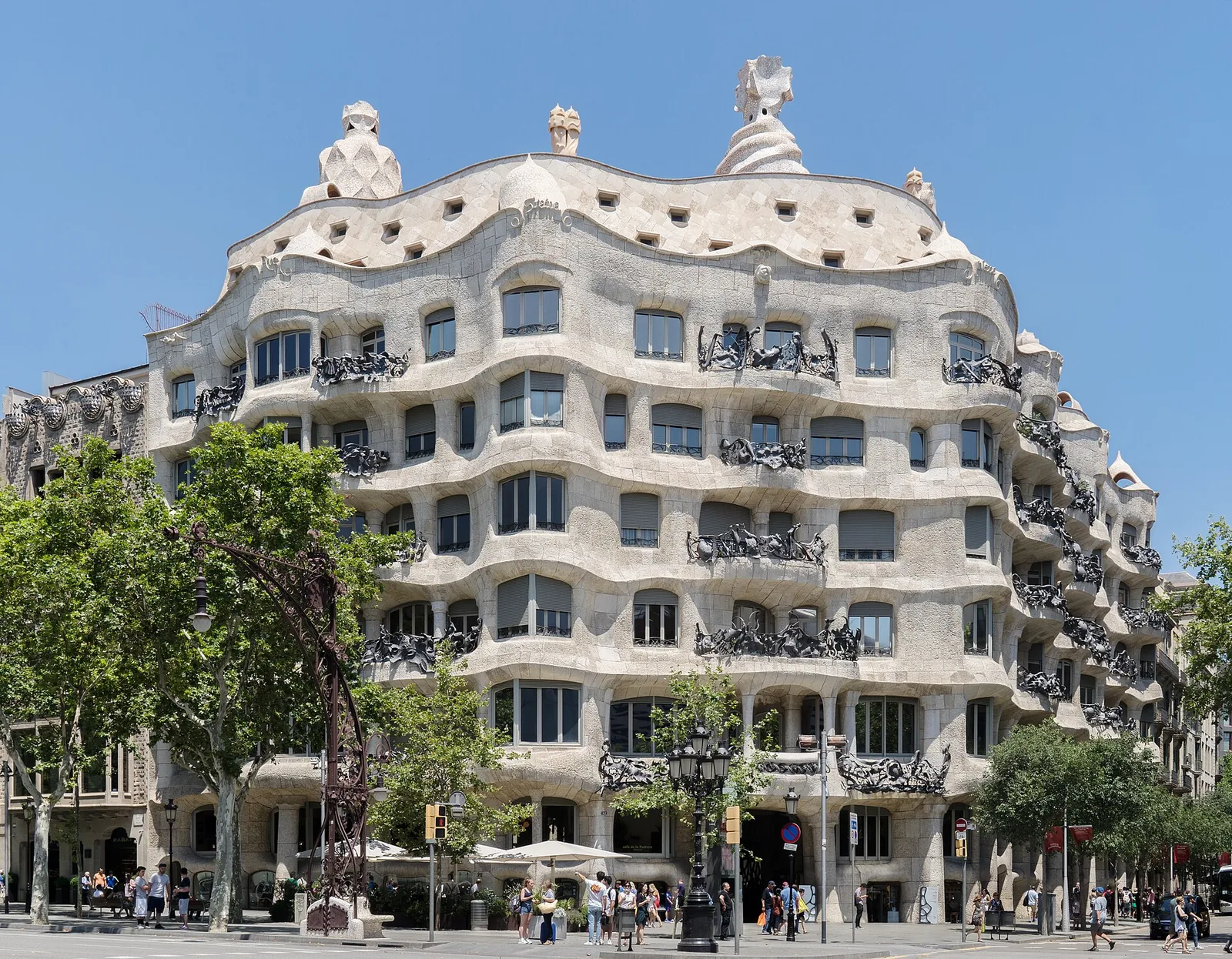
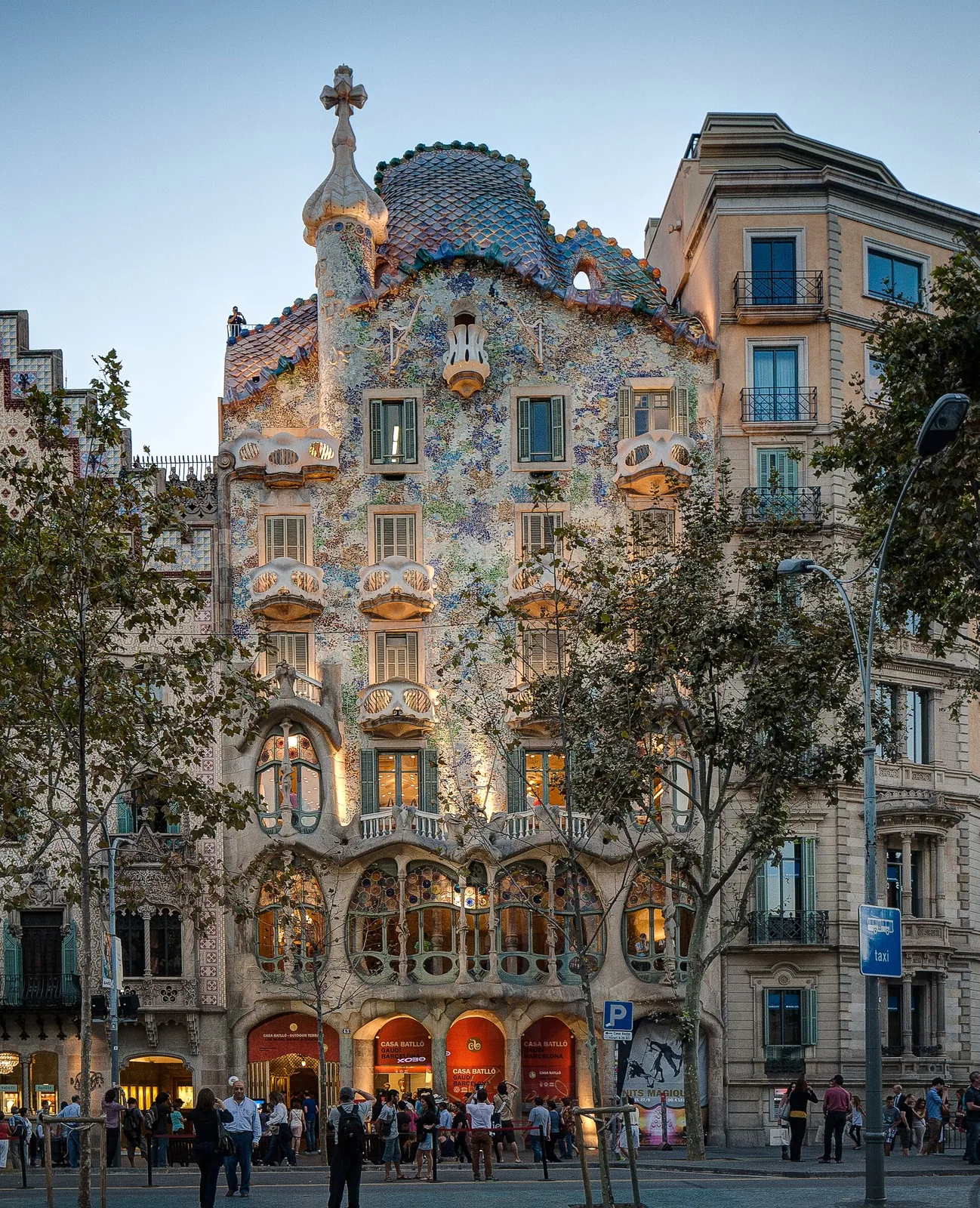
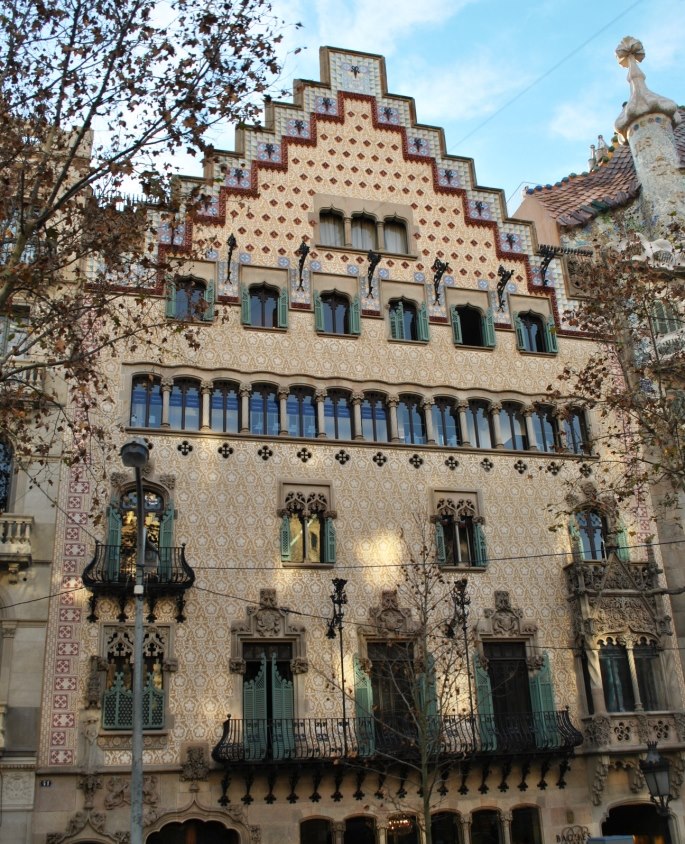
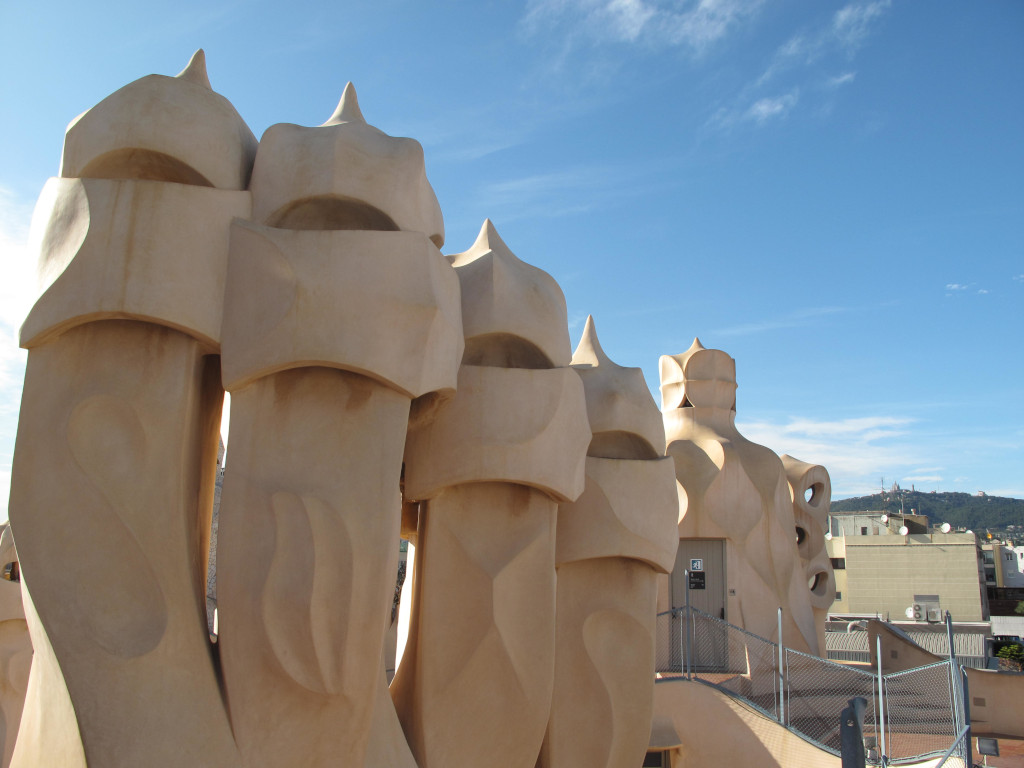
The tour includes exterior visits to La Pedrera, Casa Batlló and Casa Amatller, among other points of interest.
Meeting Points
- Group A – Barcelona Stock Exchange (Borsa de Barcelona): outside the main entrance, Passeig de Gràcia 19, 08007 Barcelona. Guide: Stefanie. Google Maps
- Group B – Swatch Store: outside the shop entrance, Passeig de Gràcia 18, 08007 Barcelona. Guide: Ulrich. Google Maps
- Group C – Monument commemorating 200 years of Passeig de Gràcia: directly at the monument. Guide: Pedro. Google Maps
- Group D – Santa Eulalia Flagship Store: outside the shop entrance, Passeig de Gràcia 93, 08008 Barcelona. Guide: Dori. Google Maps
- Group E – ERES Boutique: outside the shop entrance, Passeig de Gràcia 106, 08008 Barcelona. Guide: Adrià. Google Maps
Getting to Passeig de Gràcia
All meeting points are on Passeig de Gràcia, in the city centre.
- From Campus Nord: take Metro L3 (green line) at Zona Universitària or Palau Reial towards Trinitat Nova. No changes are needed; the ride takes about 25 minutes.
- Get off at Passeig de Gràcia for the meeting points in the lower part of the avenue (groups A and B, around numbers 18–19), or at Diagonal for those in the upper part (groups C, D and E, from number 93 upwards).
For the schedule and practical information, see the program.
Conference Dinner: Can Cortada
The GCH 2026 conference dinner will take place at Can Cortada, a restaurant serving traditional Catalan cuisine in a masia, a traditional Catalan farmhouse of medieval origin. It stands in the Horta neighbourhood, at the foot of the Collserola hills.
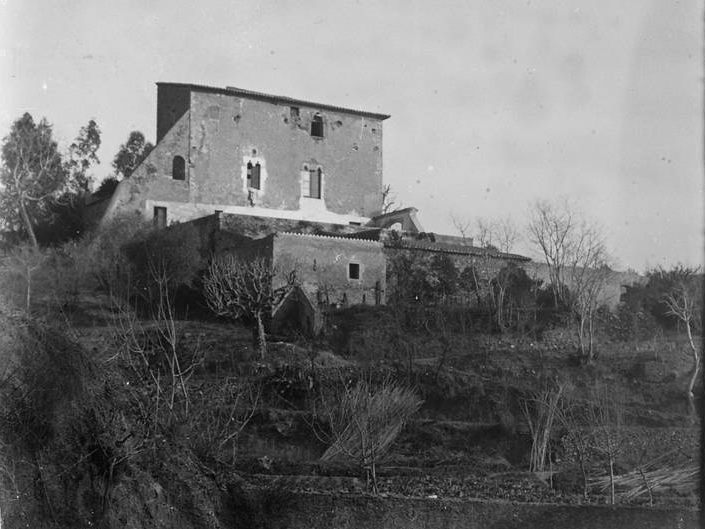
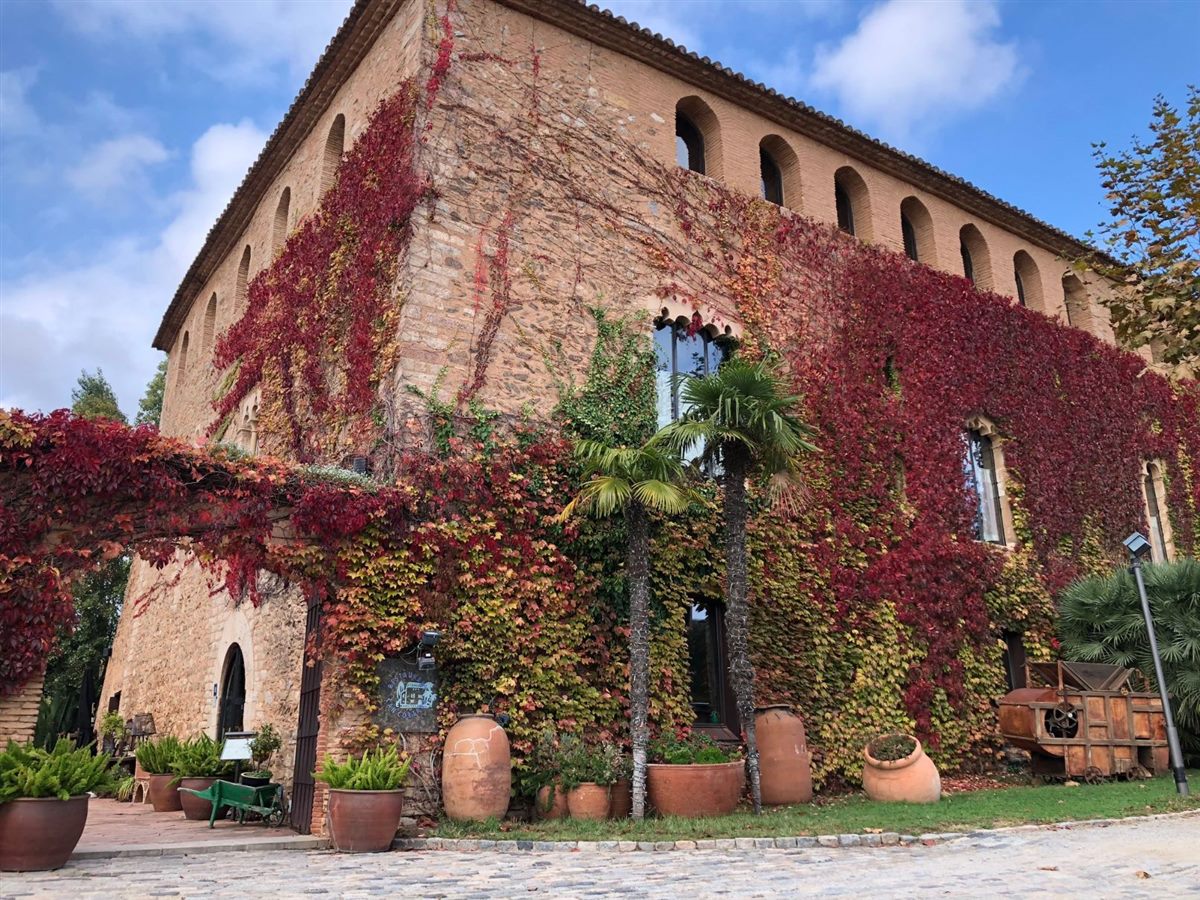
Can Cortada is a remnant of a Barcelona that no longer exists. Long before the modern city reached it, the valley of Horta was a rural landscape of fields, orchards and scattered farmhouses that supplied the city with food. The history of the site goes back to Roman times: excavations in 1987 uncovered the remains of a Roman villa. In the 11th century the lords of Horta built a defensive tower here, which was transformed into a farmhouse in the early 16th century. Between the 16th and 19th centuries it was one of the main agricultural estates of Horta, and its produce was still sold in the city well into the 20th century. The house takes its name from the Cortada family, who bought it in 1711.
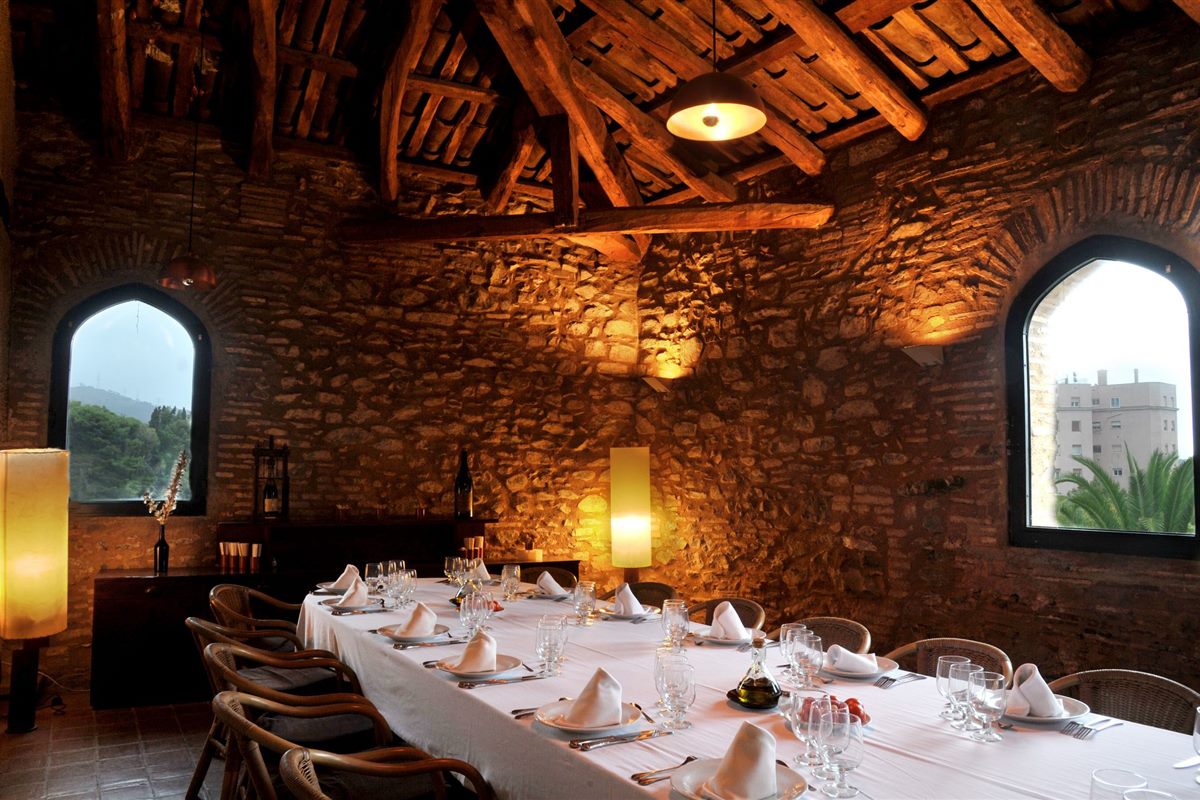
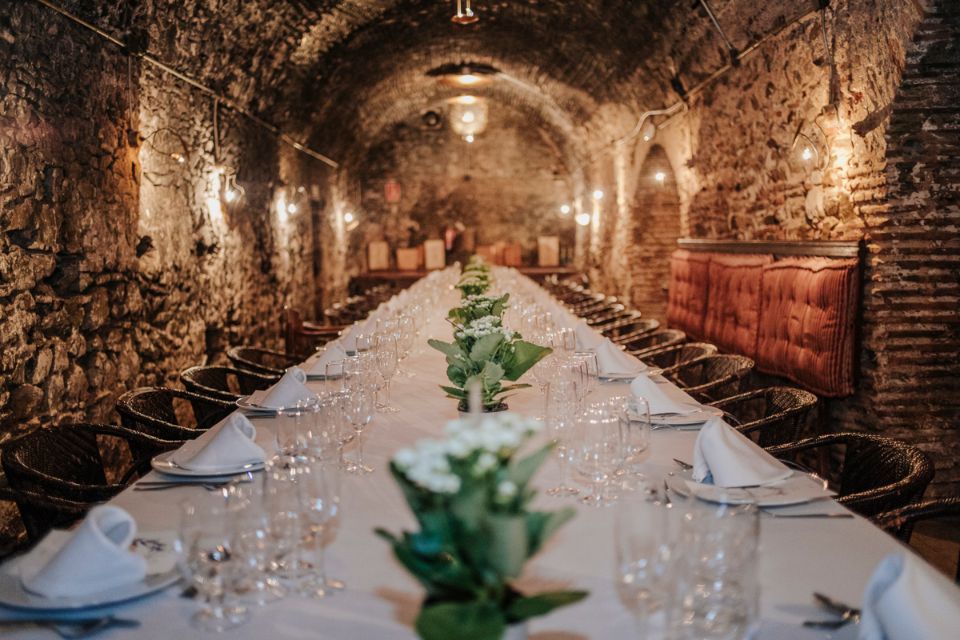
As Barcelona grew, the fields around the masia gave way to streets and housing blocks, but the building survived. Since 1994 it has housed a restaurant that preserves its original structure, and some of its dining rooms still show the stones of the medieval tower.
Getting to Can Cortada
Can Cortada is at Avinguda de l’Estatut de Catalunya, 88, in Horta (open in Google Maps).
- From Campus Nord: take Metro L3 (green line) at Zona Universitària or Palau Reial towards Trinitat Nova and get off at Valldaura. No changes are needed; the ride takes about 40 minutes.
- From the city centre: take Metro L3 at Catalunya or Passeig de Gràcia towards Trinitat Nova and get off at Valldaura.
- From Valldaura station, Can Cortada is a short walk (5–10 minutes).
For the dinner schedule, see the program.
Getting There and Around
By Train
Barcelona is well connected by high-speed rail. Barcelona Sants Station offers direct AVE and international connections to major cities in Spain and France, including Madrid, Zaragoza, València, Sevilla, Lyon, Marseille, and Paris.
In line with the conference’s commitment to sustainability, participants are encouraged to consider train travel whenever possible as a low-carbon alternative to flying.
By Plane
Barcelona–El Prat Airport (BCN) provides direct connections to most major European cities and several intercontinental destinations. The airport is connected to the city center by metro, train, bus, and taxi.
Local Transport
Barcelona has an extensive and reliable public transport network, including metro, tram, buses, and regional trains. A single integrated ticket system allows easy movement throughout the metropolitan area.
Accommodation
Barcelona offers a wide range of accommodation options, from international hotels to boutique hostels and student residences, covering all budget levels.
Participants may choose to stay in:
-
The city center
-
Areas near Campus Nord
-
Surrounding cities such as L’Hospitalet, Sant Just Desvern, or Cornellà, which often offer more affordable options and are well connected by public transport
Discovering Barcelona and Catalonia
Barcelona offers a unique blend of Mediterranean lifestyle, Catalan culture, and urban vitality.
Visitors can enjoy:
-
A rich culinary scene, from traditional Catalan cuisine to international gastronomy
-
Walkable neighborhoods with beautiful arquitecture and seaside promenades
-
Renowned museums and cultural institutions, including MNAC, MACBA, CCCB, and the Picasso Museum
-
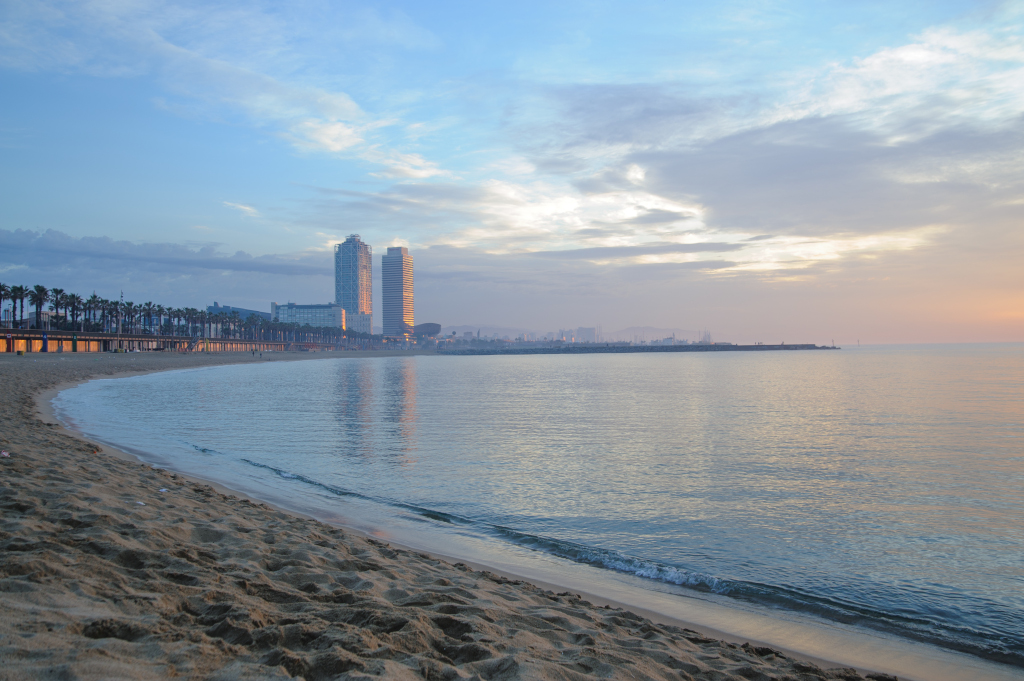
Beaches and coastal paths along the Mediterranean Sea
-
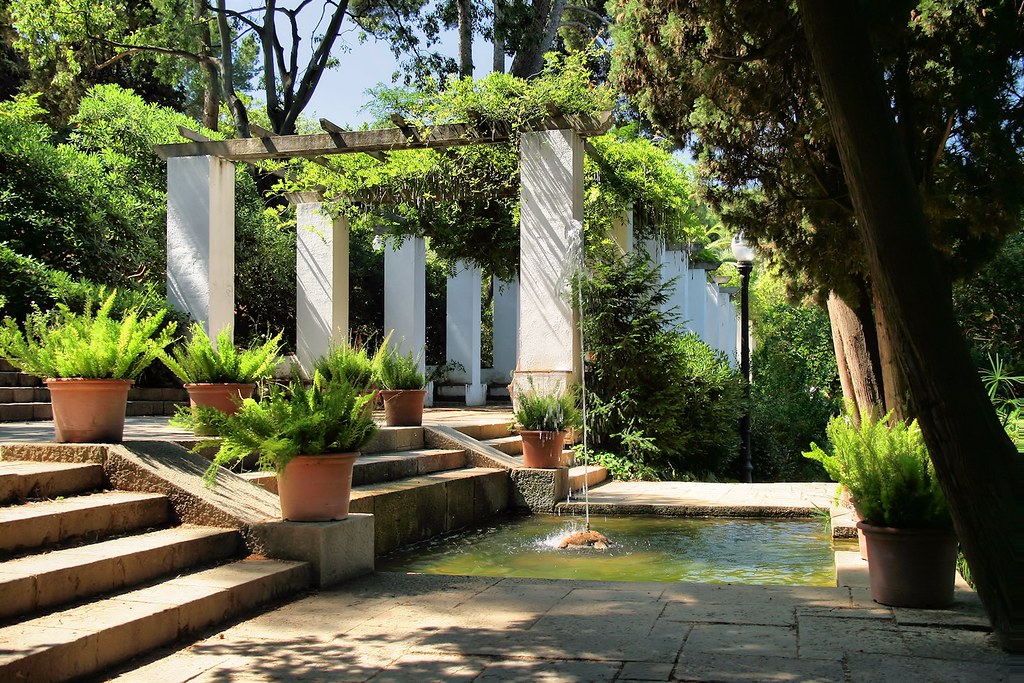
Urban parks such as Park Guell or Ciutadella, and natural areas such as Montjuïc and the Collserola Natural Park
As the cultural and economic center of Catalonia, Barcelona is also an ideal starting point for discovering the wider region, including historic cities such as Girona and Tarragona, the Pyrenees mountains, and coastal landscapes.
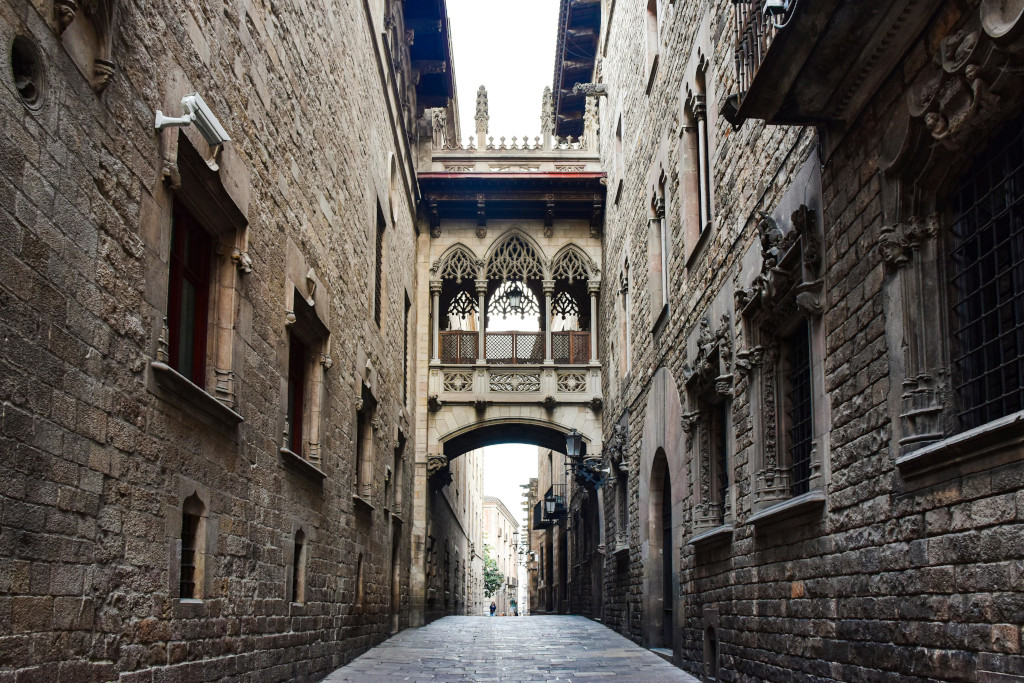
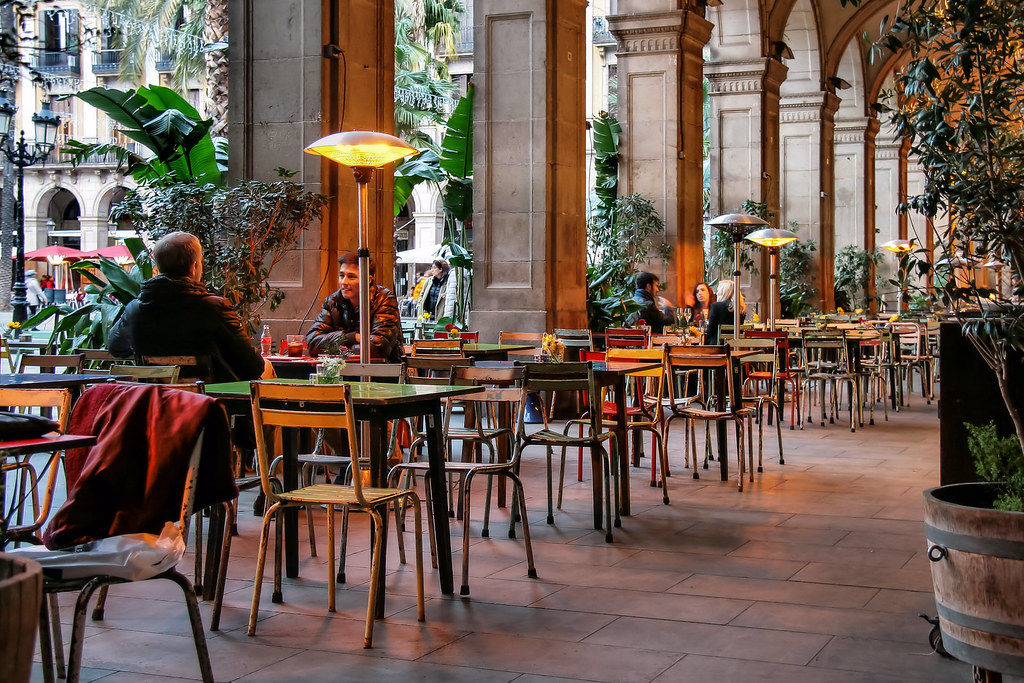
Image Credits
- Sagrada Família: Archie McNicol (Pexels), Public Domain
- Park Güell: Unknown (PickPic), Public Domain
- UPC: UPC.
- Aula Màster and Aula de Graus: GCH 2026.
- Campus Nord map: GCH 2026, adapted from the UPC campus map.
- Mare Nostrum: Martidaniel (Wikimedia Commons), CC BY-SA 4.0
- Cerdà’s plan (1859): Ildefons Cerdà, Bibliothèque nationale de France (Wikimedia Commons), Public Domain, cropped
- Casa Batlló (Social Event): Canaan (Wikimedia Commons), CC BY-SA 4.0
- Casa Amatller: Elisa.rolle (Wikimedia Commons), CC BY-SA 3.0 ES, cropped
- La Pedrera (Social Event): Thomas Ledl (Wikimedia Commons), CC BY-SA 4.0
- Can Cortada (exterior and dining rooms): Restaurant Can Cortada (cancortada.com)
- Can Cortada in 1913: Josep Salvany i Blanch, Biblioteca de Catalunya (Wikimedia Commons), Public Domain, cropped
- Casa Batlló: Angus McIntyre (disoriented.net), CC BY-NC 4.0
- La Pedrera: Acountries (Wikimedia Commons), CC BY-SA 3.0
- Jardins de Laribal: Jorge Franganillo (Flickr), CC BY-NC 2.0
- Barceloneta: Jakub Bożanowski (Viquipèdia), CC BY 2.0
- Barri Gòtic: AXP Photography (Pexels), Public Domain
- Plaça Reial: Jorge Franganillo (Flickr), CC BY-NC 2.0